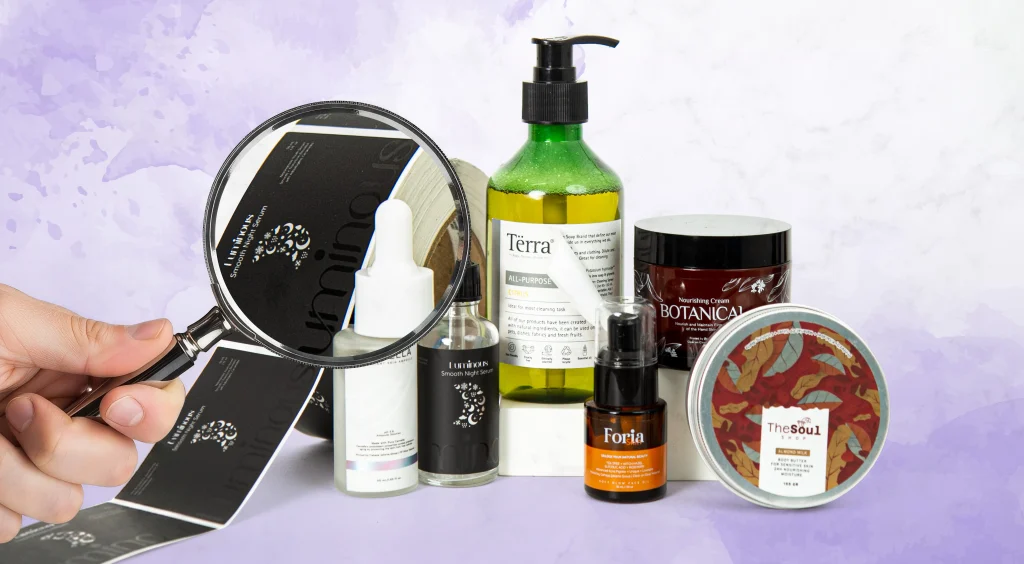
The role of labelling solutions in packaging goes far beyond simply attaching a label to product packaging. It influences how your product is perceived in the market, how it communicates with consumers, and how effectively it performs throughout distribution and daily use.
Across industries such as cosmetics, personal care, food and beverage, and household products, the labelling process has become a critical part of packaging production. Beyond visual presentation, it directly affects application efficiency, durability, product visibility, and overall packaging performance.
Because every type of packaging has unique characteristics and requirements, there are various labelling solutions designed to suit different packaging containers. Choosing the right solution requires a clear understanding of how labels interact with different packaging structures, materials, and production conditions. This is why selecting the appropriate labelling solution plays an important role in supporting both packaging functionality and overall product presentation.
The Importance of Labelling Solutions in Packaging Performance
The right labelling solution plays a critical role in overall packaging performance. Poor label application can affect multiple aspects, including product visibility on shelves, user experience, and durability during handling and distribution.
However, in real production environments, labelling challenges are more common than expected. For example:
- Misaligned label placement
- Air bubbles or wrinkles during application
- Labels peeling or lifting over time
- Difficulty applying labels on curved or flexible surfaces
- Inconsistent results in high-speed or large-scale production
In many cases, these issues occur when the selected labelling solution does not align with the packaging structure, material characteristics, or production conditions.
Without proper consideration during the packaging development stage, even visually appealing packaging may experience application inconsistencies or performance issues during production and distribution.
Common Types of Labelling Solutions for Packaging
Labelling solutions are applied to pressure-sensitive labels, one of the most widely used label types across various industries. To gain deeper insight into how different labelling solutions work in real packaging applications, here are some of the most commonly used labelling methods used across industries.
Round Labelling
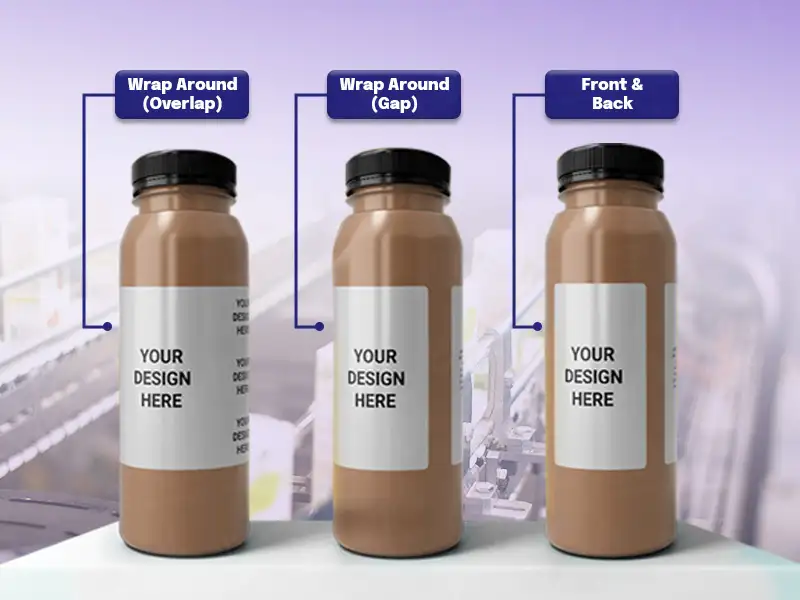
Round labelling is a type of labelling solution that is designed for cylindrical packaging. It is widely used for bottles or jars across industries such as food and beverage, household, as well as beauty or personal care.
This solution is often used when you need consistent alignment and efficient application in high-volume production. Round labelling helps you ensure label placement around the container, supporting both visual consistency and production efficiency, especially for high-speed production where alignment consistency directly affects product shelf appearance.
Depending on the application and visual requirements, round labelling can be applied in several ways. There are three common types of round labelling, but for cylindrical packaging, shrink sleeve labels are also a common alternative worth considering.
Wrap Around (Overlap)
A full 360-degree label with a slight overlap at the seam, creating a seamless and continuous full-coverage appearance.
Wrap Around (Gap)
A full 360-degree label that leaves a neat gap between the ends for a more refined appearance and partial container visibility.
Front and Back
Two separate labels that are applied to the front and back of the container to highlight key visual and product details separately.
Side Labelling
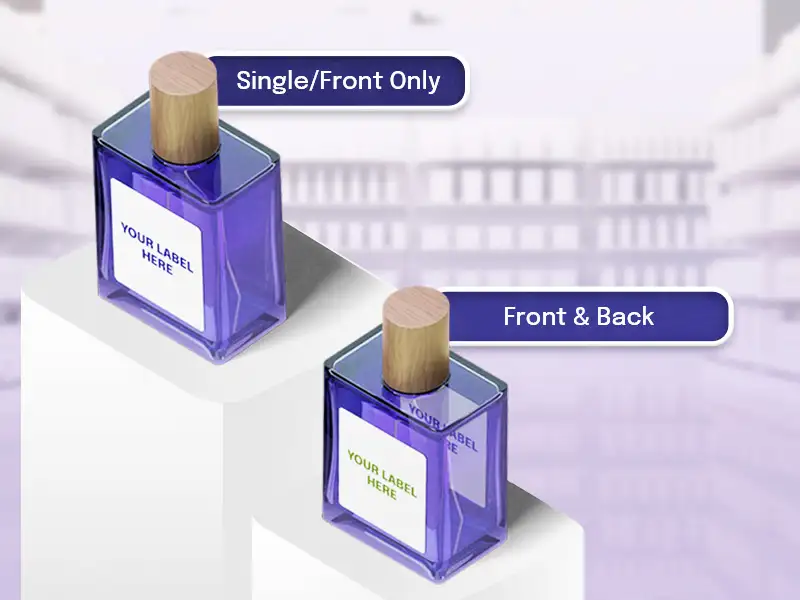
Side labelling is a type of labelling solution that is designed for rectangular or flat-surface packaging. It is widely used for bottles, jars, or boxes across industries such as food and beverage, household, automotive, beauty or personal care.
This solution is often used when you need clear and structured label placement on a specific side of the packaging. Side labelling helps you ensure precise label positioning, supporting strong visual focus and organized product information.
Depending on the packaging structure and branding requirements, side labelling can be applied in several ways. There are two common types of side labelling.
Single Side (Front Only)
A label applied on one side of the packaging, offering a simple and clean appearance for straightforward branding.
Front and Back
Two separate labels that are applied to the front and back of the container to keep branding and product information clearly organized.
Top Labelling
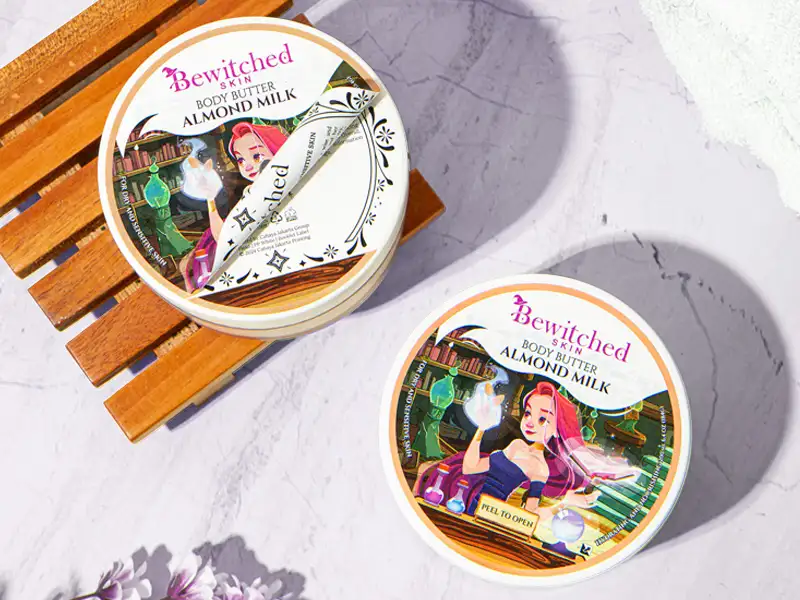
Top labelling is a type of labelling solution that is designed for labels on the upper surface of packaging with flat lids or caps. It is commonly used for bottles, or jars across industries such as food, household, and personal care.
This solution is often used when you need clear and perfectly centered label placement on the top side of the packaging. Top labelling helps you ensure consistent label positioning, supporting smoother production flow while also enhancing the overall packaging appearance to strengthen brand visibility and create a stronger shelf presence.
Tube Labelling
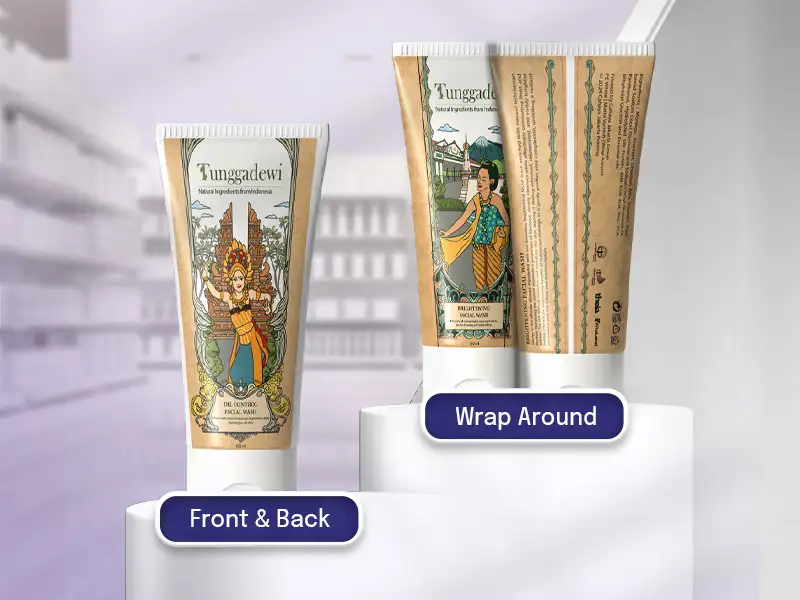
Tube labelling is a type of labelling solution that is designed for tube packaging. It is widely used across industries such as cosmetics, personal care, pharmaceuticals, and food products.
This solution is often used when precise application is required on curved surfaces and flexible materials. With accurate alignment, controlled pressure, and consistent rotation, this solution ensures the label fits seamlessly along the surface without wrinkles, bubbles, or misplacement.
Depending on the packaging needs and branding requirements, tube labelling can be applied in several ways. There are two common types of tube labelling.
Front and Back
Two separate labels that are applied to the front and back of the container for better separation between branding and product information.
Wrap Around
A full 360-degree label that wraps seamlessly around the container for a sleek, full-coverage look.
How to Choose the Right Labelling Solutions
Choosing the right labelling solutions is about aligning the application process with key factors such as packaging design, production requirements, and visual branding needs. To determine the most suitable approach, it is important to consider the following aspects of your product, such as:
- Surface type: Is the packaging round, flat, curved, or flexible?
- Application method: Will it be manual or automated?
- Production volume: Does it require high-speed consistency?
- User interaction: Will the packaging be frequently handled?
In many cases, the success of a labelling process depends on how well it integrates with both the packaging structure and the production system. Selecting the right labelling solutions early in the development process can help prevent production inefficiencies, reduce errors, and ensure consistent product presentation.
If you are currently evaluating the most suitable labelling solutions for your packaging, it is important to assess how each method aligns with your packaging structure, product characteristics, and production requirements.
At CJ Pack, we support businesses in identifying labelling solutions that are tailored to real production conditions, ensuring both application efficiency and visual consistency.
To explore suitable labelling approaches for your product, feel free to connect with our team:
- WhatsApp: https://wa.me/62811949769
- Email: [email protected]
Frequently Asked Questions
What is the difference between round and side labelling?
Round labelling is designed for cylindrical packaging, while side labelling is typically used for flat or rectangular surfaces.
Which labelling solution is suitable for curved packaging?
Round labelling and tube labelling are commonly used for curved packaging structures depending on the container shape and application requirements.
Why is proper label application important in packaging?
Proper label application helps you maintain product appearance, production consistency, and packaging durability throughout distribution and handling.
Can labelling solutions affect production efficiency?
Yes. The right labelling solution can help you improve application consistency, reduce production errors, and support smoother operations, especially in high-volume production.
How do I choose the right labelling solution for my packaging?
Choosing the right labelling solution involves evaluating several factors, including surface type, application method, production volume, and user interaction. Evaluating these factors early can help you identify the right labelling solution for better application consistency and overall packaging performance.